
My Life in Britain
I moved to Britain from Ukraine at the beginning of the full-scale war. At the time, I did not really understand what this move would mean for me or how long I would be away from home. Everything happened very quickly. I left Ukraine, moved to Britain, and suddenly had to build some kind of new life while knowing that the life I had before was still continuing somewhere far away.
The practical side of moving was difficult, of course, but for me the hardest part was dealing with everything mentally. I think I underestimated how much the experience would change me. Before the war, I was a very extroverted person. I enjoyed meeting people, talking, going out and being surrounded by others.
After moving to Britain, however, I almost completely lost the desire to communicate with anyone. For quite a long time, I became a very closed person. I created my own little bubble and felt most comfortable staying inside it. I did not particularly want to make new friends or meet new people. I just wanted to be left alone. Looking back, I think I simply needed time to process everything that had happened. For almost two years, and probably closer to two and a half, I lived this way. Then, slowly, I started feeling that I wanted to connect with people again, meet new people and become part of life rather than just exist in it.
Another thing that helped me a lot was learning English. When I first arrived, I focused heavily on studying the language. In a way, I became almost like a robot: I studied, worked, learned, repeated the process and tried not to think too much. Having something concrete to concentrate on gave me a sense of direction when many other things felt uncertain.
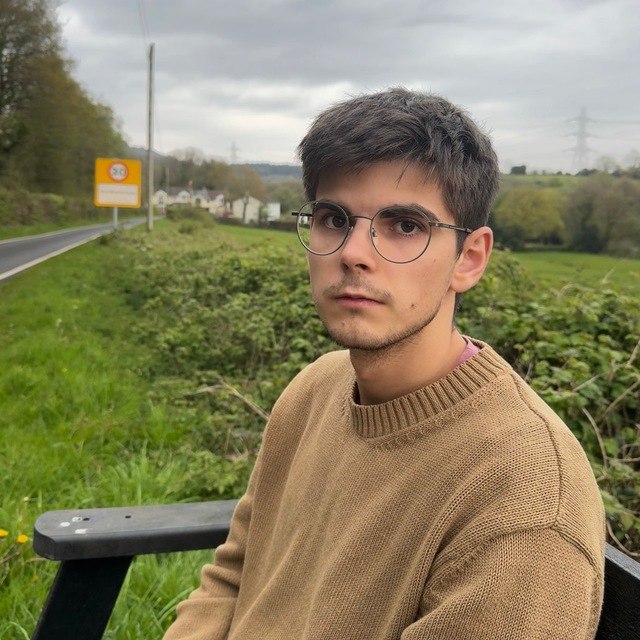
Ruslan in Wales, on the outskirts of Cardiff | From a personal archive
I also try not to follow the news too closely. This is probably one of the most difficult things for me emotionally. Whenever I start reading too much about what is happening in Ukraine, it becomes very hard to switch my thoughts off. I start thinking about everything that has happened, about the people who are still there, and about the uncertainty of the future. So sometimes protecting myself means simply not looking.
My relationship with my mother was also affected by the move. We came to Britain together and lived together for some time. She was going through her own difficulties, and I was dealing with mine, and we did not always react to things in the same way. It was difficult for both of us, and maintaining a good relationship required a lot of patience and effort. Eventually, things became easier, but I think we both needed time and space to adjust.
Now, four years later, I feel much better than I did in the beginning. I have more energy and, importantly, I have started thinking about my future again. For a long time, I did what I had to do simply because it was necessary. I did not really feel like I was building a life. Now I finally feel that I have the strength and desire to make plans and actually create something for myself.
One of the biggest things I have learned is that sometimes you simply need time. I needed time to be alone, to understand what had happened to me and to slowly find myself again. At the same time, I have realised how important the people around me are. Today, communication and the people in my life genuinely help me. I have also learned that I can be completely comfortable on my own, but I can also enjoy being part of a large group.
