

Finding Myself Far from Home
By Assia Satella and Ihor Radchenko
The full-scale invasion began halfway through my first year of studying in Britain – my foundation year. I had come here by choice and had only had one term to enjoy student life abroad: parties, sleepless nights – it was the best time of my life. I went back to Kyiv for the winter holidays and had already planned another visit in April, but that trip never happened.
The hardest thing at the time was feeling that there was nothing I could do to help my family. I had to calm myself down and pretend everything was fine so I could continue the studies I had wanted so much. That was when I started vaping heavily, going to the toilets with my classmates to vape during almost every break. One day, one of them asked to borrow my vape, and just then, a member of university staff walked in. I took the blame and was made to hand over my student ID in front of the whole class while the incident was reviewed. After classes, a member of staff approached me, apologised and gave me permission to vape by a window in a stairwell that nobody used.
It may sound strange, but that was when I felt the understanding I so badly needed. Our lecturers held meetings with students from Ukraine (for some reason, from Russia too) and said they were always there to support us through difficult moments and talk things through. In Britain, there is a different understanding of wellbeing and how to support people psychologically during difficult times. I am very grateful that, rather than simply hearing the usual “Let us know if you need anything!”, I was understood without having to explain myself at length. They simply allowed me to hold on to a ritual that helped me find the strength to get through those terrible days.
For about another year, I felt depressed and stopped keeping in touch with my friends from other countries. I did not socialise with my classmates, barely spoke to anyone apart from a few acquaintances, and tried to find myself outside university. Later, I happened to hear about the university’s Ukrainian society, although at first I only occasionally took part in its activities. Its members organised a screening of a documentary about the Kakhovka disaster, where I met other interesting Ukrainians. I began taking more of an interest in the society, started volunteering at demonstrations in support of Ukraine and realised that community work was something I really wanted to do.
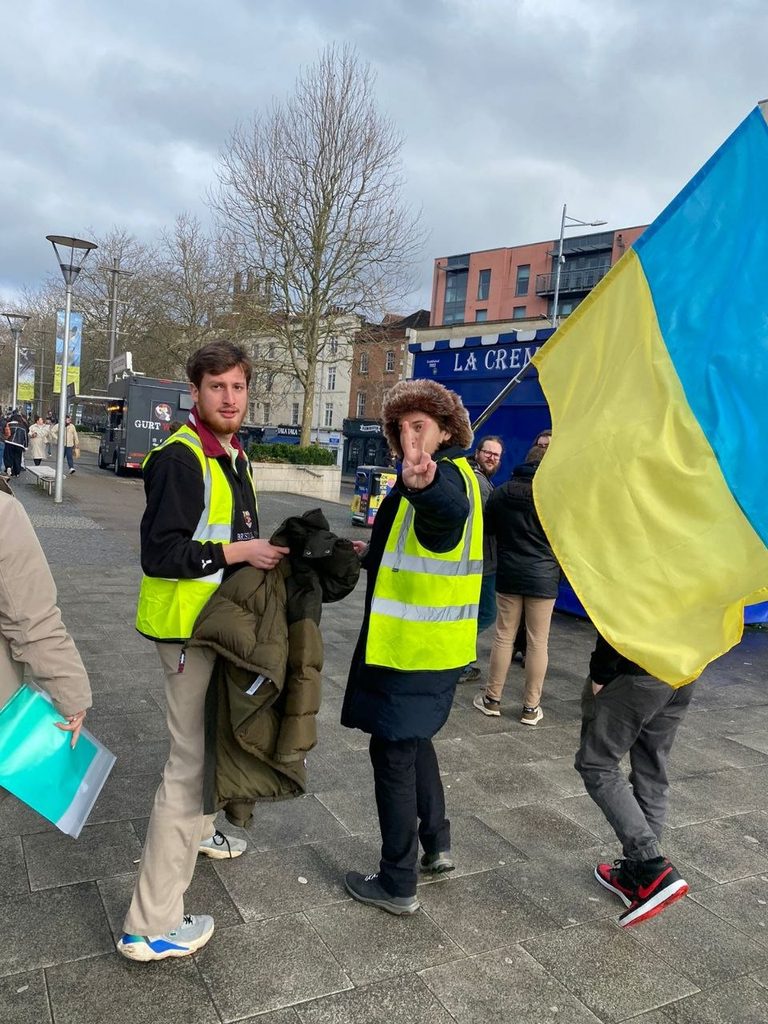
At the first opportunity, I stood for election as president of the society and won. That role helped me find myself. Together with my team, we brought exciting initiatives to life, raised Ukraine’s profile across the university and became an example for other societies. The position opened the door to student representation and allowed me to reach heights I could not even have imagined just three years earlier.
Above all, I was able to continue enjoying student life. I quit smoking, cut down on drinking and went to fewer parties. But today, happiness for me means working to support Ukrainians, developing initiatives and organising events that will make life happier for Ukrainians in Britain.
